Things to do in Fontvieille: a village guide to the stone quarries, market days and getting there
In short: Things to do in Fontvieille, a village of about 3,500 people near Arles: walk to Daudet’s windmill, see houses built into old stone quarries, shop the Monday and Friday morning market, visit Roman Barbegal 2 km away and use it as a base for Les Baux, Montmajour and Arles.
Updated 20 November 2026 by Fontvieille Village Guide editors
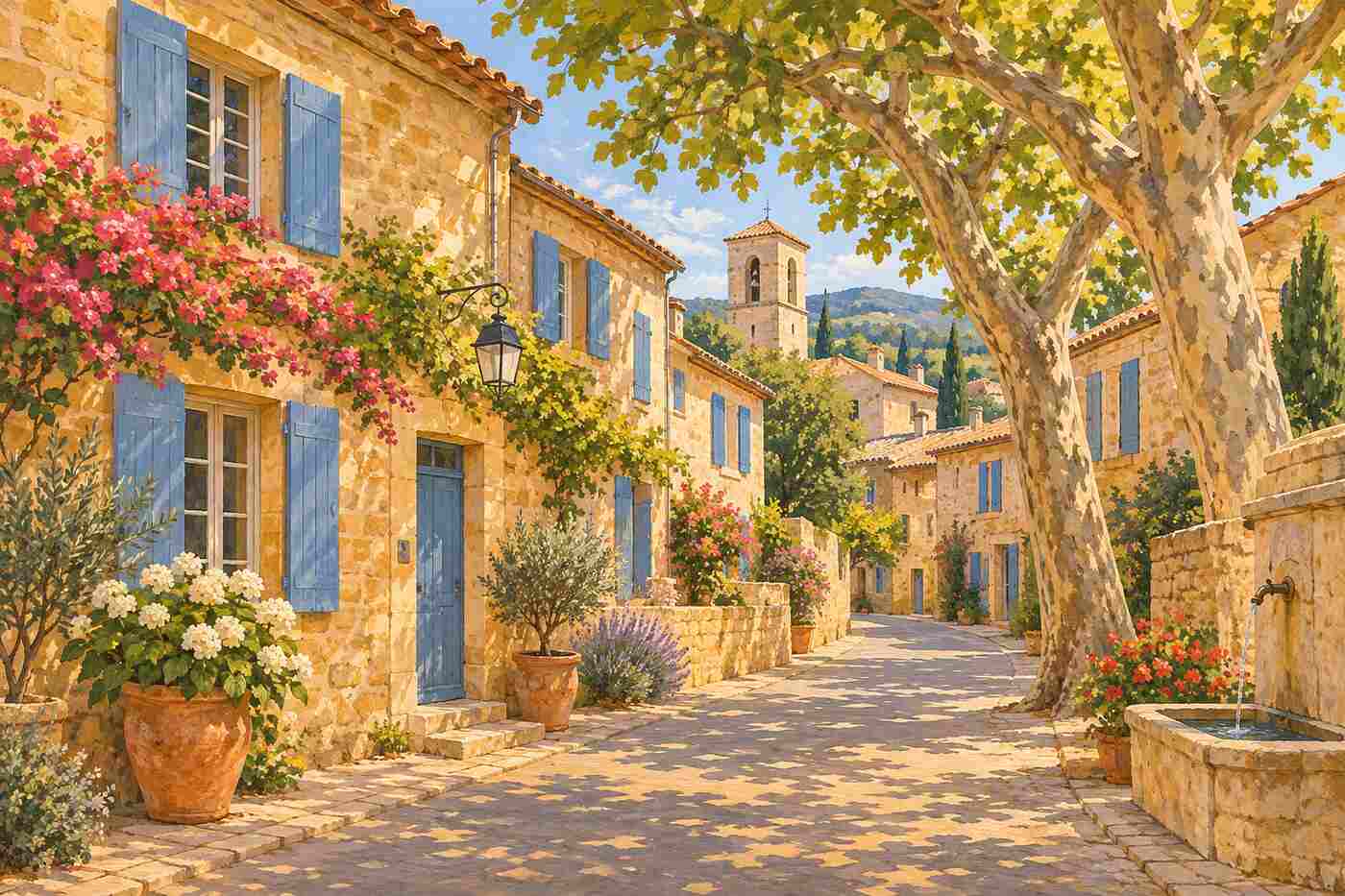
Fontvieille is a stone village at the western tip of the Alpilles, between Arles and Les Baux-de-Provence. Most visitors come for one thing, the windmill linked to Alphonse Daudet, and leave without seeing the rest. This Fontvieille village guide covers the other things to do in Fontvieille: the quarries that built the arenas of Arles and Nîmes, the market, the church, the Roman mills and the walks, plus the practical side of getting there. It draws on the town hall, the Alpilles tourist office, regional guides and independent travel writers, and names them where their figures differ.
Some definitions. The Alpilles are a small limestone range in the Bouches-du-Rhône, between the Rhône and the Durance. A commune is the smallest unit of French local government, with its own mayor. Pierre de Fontvieille is the local soft shell limestone. A marché provençal is an open-air food and produce market.
Where is Fontvieille?
Perfectly Provence calls Fontvieille the Alpilles village closest to Arles and puts its population at about 3,500. ProvenceWeb gives 3,571 inhabitants, and France Voyage gives an area of 40.18 km². Horizon Provence lists the distances as 9 km to Les Baux, 10 km to Arles, 12 km to Saint-Rémy-de-Provence and 32 km to Avignon.
| From Fontvieille to | Distance (Horizon Provence) |
|---|---|
| Les Baux-de-Provence | 9 km |
| Arles | 10 km |
| Saint-Rémy-de-Provence | 12 km |
| Avignon | 32 km |
Other guides measure differently: Ryo gives 20 km to Arles by the D17 and 30 km to Avignon, and 20 km to Saint-Rémy. The differences come from where each guide starts and ends the count.
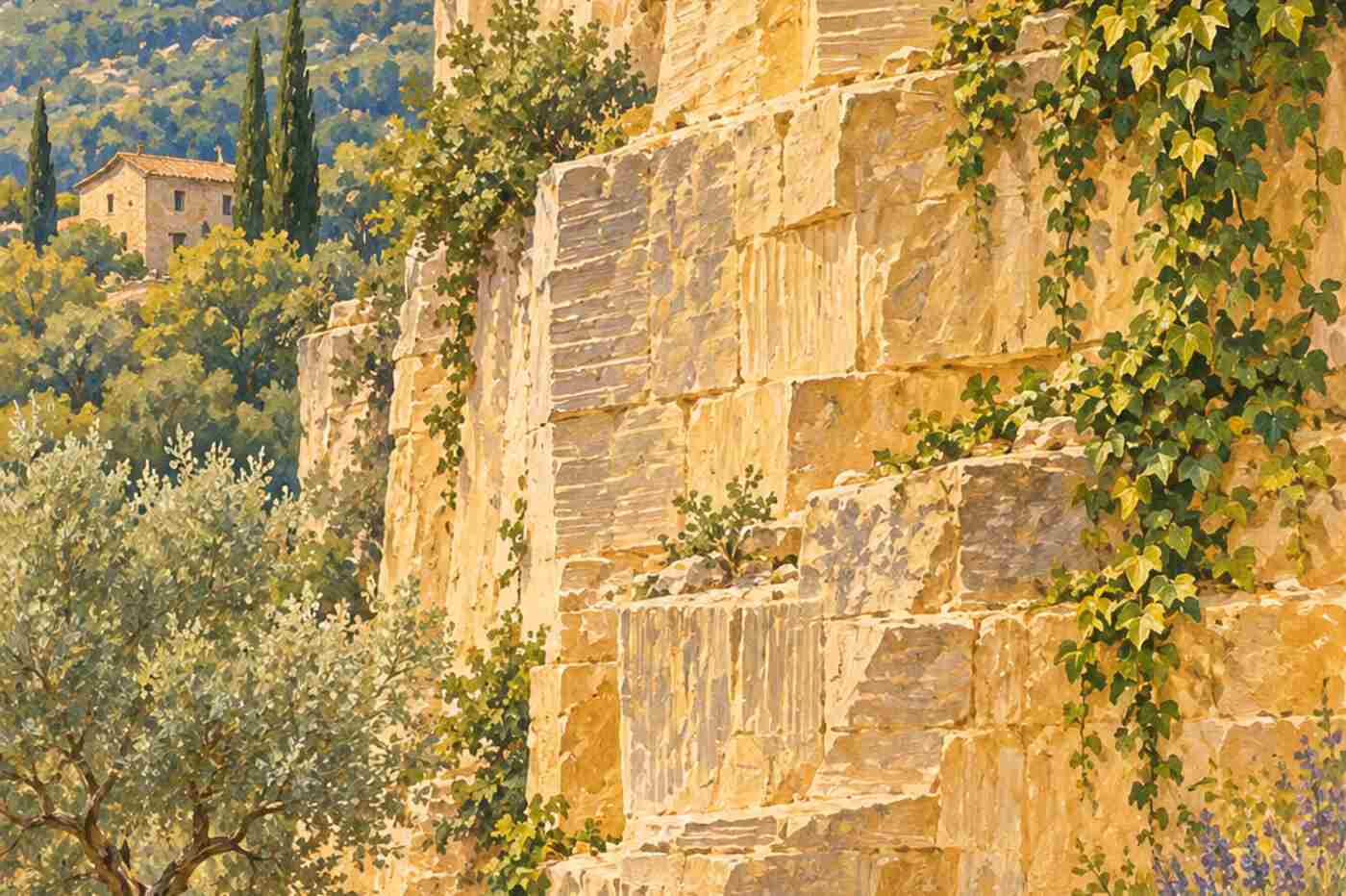
Fontvieille village: built of stone
The quarries are the reason Fontvieille exists in its present form. The Alpilles tourist office says Fontvieille stone was cut in Roman times and that quarrying grew in the early 15th century with the building of the Château de Tarascon. In 1914 the quarries produced 24,000 m³ of stone a year; today the figure is about 2,000 m³. The stone went to Arles, to Lyon along the Rhône and to Nice. The First World War took the workforce, and concrete replaced cut stone after it.
A second tourist office page on the stone village says more than 200 quarry workers lived here from the 15th century. Only one quarry, Les Taillades, is still worked, by Carrière de Provence on the route des Baux, and visits are by appointment. The old galleries, with soot drawings and graffiti left by the quarrymen, are closed to the public for safety.
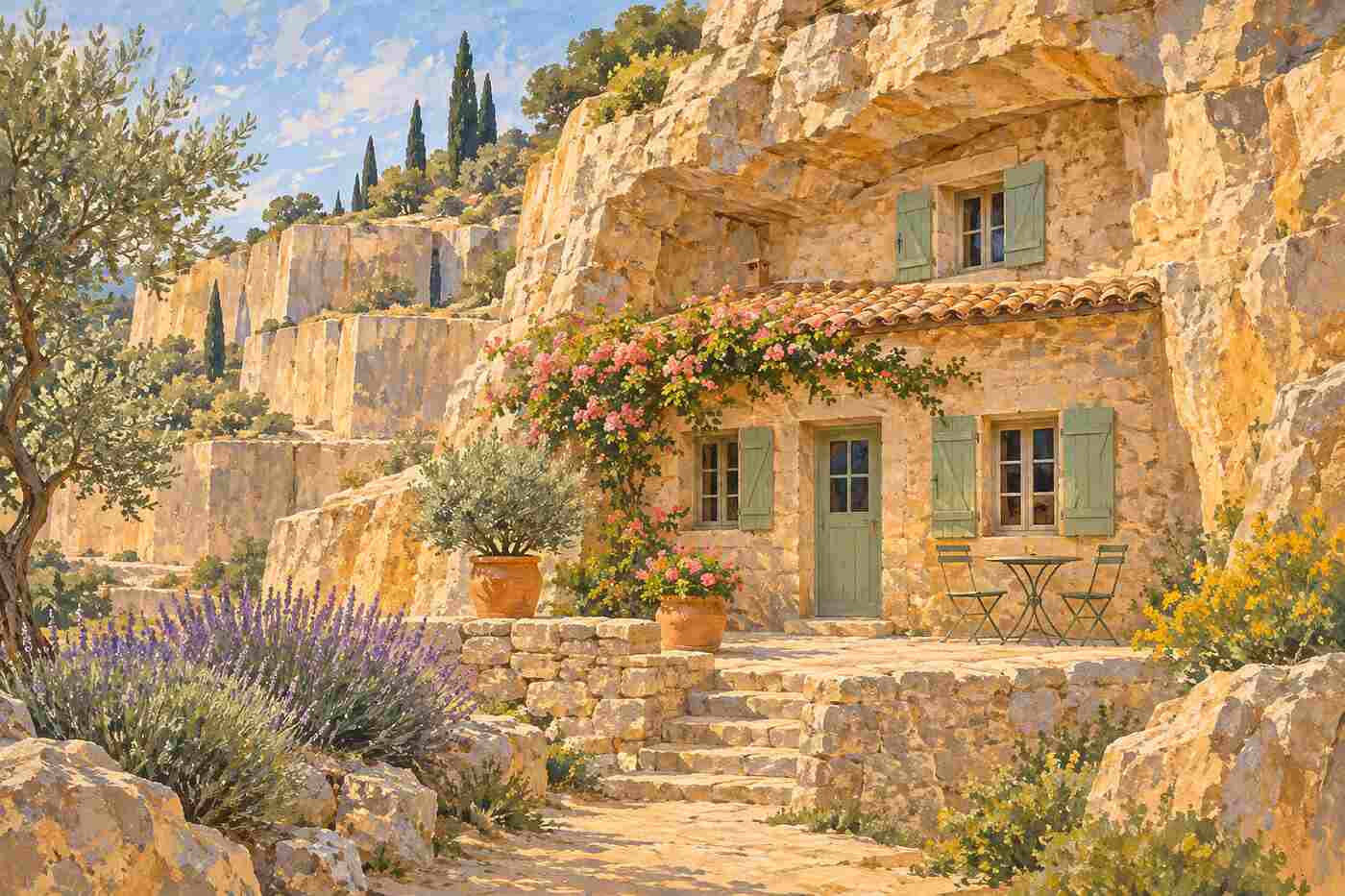
The Planet district
ProvenceWeb describes the Planet district as a curiosity of the village, with houses set into the hollows of old quarries. It says stone was cut there from the 15th century to 1914 and used for the arenas of Arles and Nîmes. Walk the lanes on foot and look for the cut faces behind and above the houses. These are private homes, so stay on the public streets.
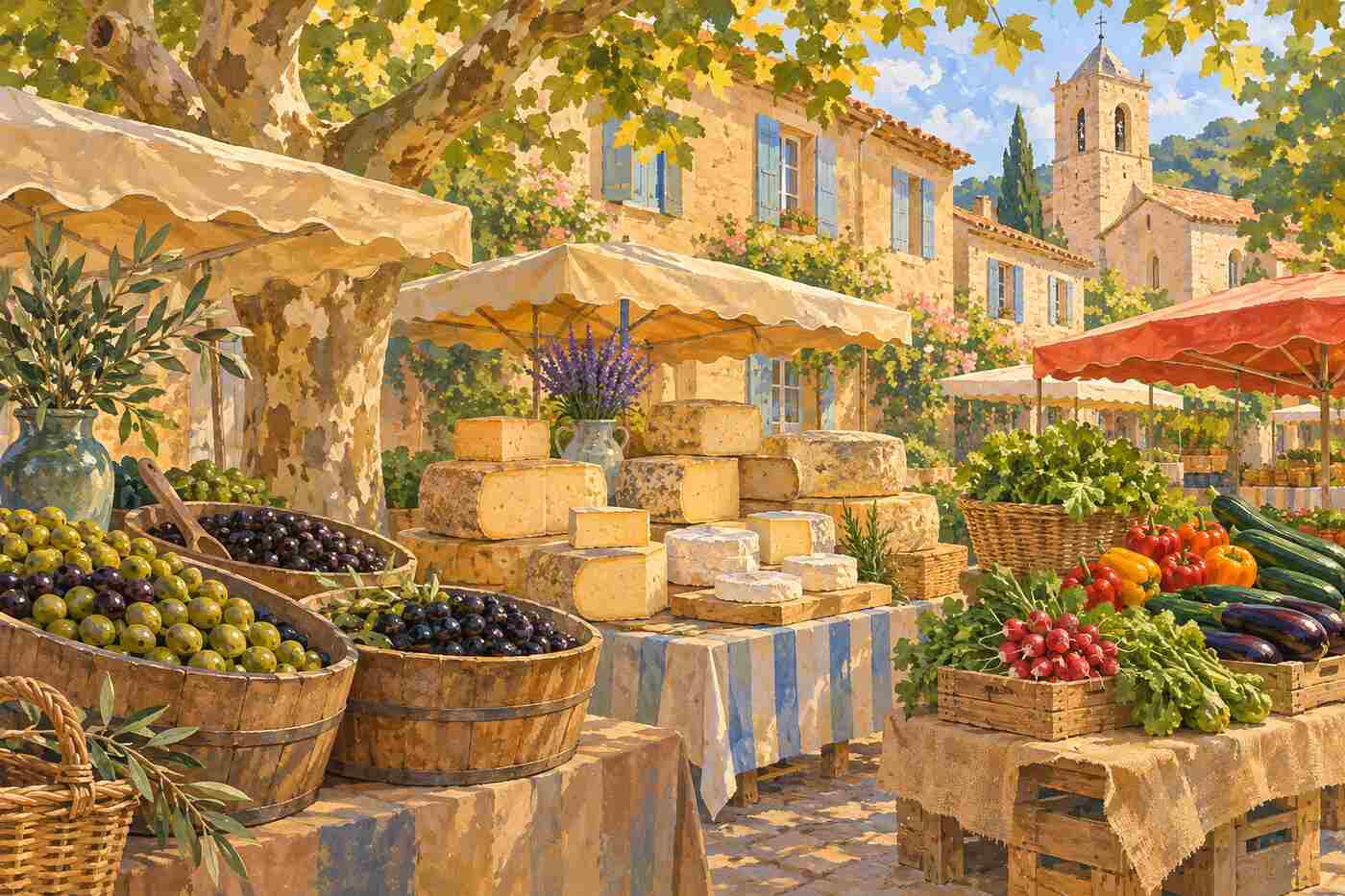
Things to do in Fontvieille: market days and the village centre
ProvenceWeb says the Provençal market is held on the avenue des Moulins on Monday and Friday mornings, and that parking by the tourist office is hard on those days. Provence Guide gives market hours of 8am to 12.30pm. Ryo mentions a Wednesday morning market on the place de l’Église; we could not confirm it from the town hall, so treat Monday and Friday as the reliable days.
The parish church of Saint-Pierre-ès-Liens is on the walking routes. Chemins des Parcs says building began in 1695 because the old church had become too small, that it served as a communal hall after 1790 and that the second bell tower was added in 1866, which explains why the two towers do not match.
The windmills and Daudet
ProvenceWeb names four mills on the hill above the village, Sourdon, Ribet, Ramet and Tissot-Avon, and says Tissot-Avon was fully restored in 2016. The Ribet mill, also called the Moulin Saint-Pierre, is the one known as Daudet’s windmill. The full story, with 2026 opening times, is in our guide to Alphonse Daudet’s windmill in Fontvieille. ProvenceWeb says the Château de Montauban, which holds the Daudet museum, opens from April to September; the town hall’s 2025 dates ran from late May to early October.
Roman Fontvieille and the abbey
Two of the most important ancient sites in Provence are within a short drive. Martigues Tourism places the Barbegal aqueduct and mills 2 km from the village and says they are open all year. Wikipedia describes Barbegal as the greatest known concentration of mechanical power in the ancient world. Read our guide to the Barbegal aqueduct and Roman mills.
On the road to Arles is the abbey of Montmajour, founded in 948, according to its official site. ProvenceWeb also lists the Fontvieille hypogea, Neolithic burial chambers cut into the rock. See our guide to Montmajour Abbey.
Getting there and staying
Without a car, the regional bus line 707 runs between Arles and Fontvieille, according to the Zou! winter timetable. Ryo says Arles station has TGV trains from Paris in about 3 hours 45 minutes and regional trains from Marseille in about 50 minutes, and that the Alpilles cycle route reaches Fontvieille from Arles in about 1 hour 30 minutes on near-flat roads. For walking, camping and summer fire rules in the hills, see our guide to walking in the Alpilles from Fontvieille. For a half-day trip up the road, see Les Baux-de-Provence from Fontvieille.
Getting there by bus and train
Fontvieille has no railway station; Arles, about 10 km away, is the nearest. The Zou! line 707 timetable, valid from 3 November 2026 to 2 July 2027, lists three stops in the village, Croix Rouge, La Tour and Saint Victor, and gives 16 to 20 minutes from Arles station. Few buses run the full way, so plan around the timetable. Direct regional trains reach Arles from Avignon Centre in about 16 minutes, according to SNCF Connect. Our guide on how to get to Fontvieille has the full details, including Marseille airport and the TGV from Paris.
A day in Roman Arles
Once in Arles, the Roman monuments are the obvious next step. UNESCO listed Arles, Roman and Romanesque Monuments in 1981; the arena, the theatre and the underground cryptoporticus date from the 1st century BC. On the way from Fontvieille, bus 707 stops at Montmajour Abbey. Read our guide to the Arles Roman monuments from Fontvieille for 2026 hours, prices and passes.
Key takeaways
- Fontvieille has about 3,500 inhabitants and is the Alpilles village closest to Arles.
- Its stone was cut from Roman times; only Les Taillades quarry still works.
- The Planet district has houses built into old quarry hollows.
- The market is on Monday and Friday mornings on the avenue des Moulins.
- Barbegal, Montmajour and Les Baux are all within about 10 km.
Common questions
Is Fontvieille worth visiting?
Yes, for half a day or more. Beyond Daudet’s windmill, the village has stone quarries that supplied the arenas of Arles and Nîmes, a quarry district with houses built into the rock, a twice-weekly market and Roman Barbegal 2 km away. It is also a quieter base than Arles or Saint-Rémy for exploring the western Alpilles.
What day is the Fontvieille market?
ProvenceWeb lists Monday and Friday mornings on the avenue des Moulins, and Provence Guide gives hours of 8am to 12.30pm. Ryo also mentions a Wednesday market on the place de l’Église, which we could not confirm. Arrive early on market days, as parking by the tourist office fills quickly.
Can you visit the Fontvieille quarries?
Only in part. The Alpilles tourist office says the old galleries are closed for safety, and the one working quarry, run by Carrière de Provence, takes visits by appointment. Ryo says the old quarries east of the centre open during the Journées du Patrimoine or on organised visits. The Planet district can be seen from the street.
How do you get to Fontvieille without a car?
By bus or bike from Arles. Zou! line 707 links Arles and Fontvieille, and Ryo says the Alpilles cycle route takes about 1 hour 30 minutes on near-flat roads, with bike hire in Arles. Arles station has direct TGV trains from Paris and regional trains from Marseille.
Does Fontvieille have a train station?
No. The nearest station is Arles, about 10 km away, linked to the village by Zou! bus 707 in 16 to 20 minutes.
Is Arles worth a day trip from Fontvieille?
Yes. Its Roman arena, theatre and cryptoporticus are a UNESCO World Heritage site, about 10 km from the village.
How we put this together: population and the Planet district come from ProvenceWeb and Perfectly Provence; distances come from Horizon Provence and Ryo, which measure differently; quarry history comes from the Alpilles tourist office; the church comes from Chemins des Parcs; market days come from ProvenceWeb and Provence Guide, with Ryo’s Wednesday market noted as unconfirmed; transport comes from Zou! and Ryo. Checked 20 November 2026. Back to the Fontvieille Village Guide home page.
Sources
- ProvenceWeb: Fontvieille
- Perfectly Provence: A guide to the villages of the Alpilles
- Alpilles en Provence: The stone quarries of Fontvieille
- Alpilles en Provence: Un village en pierre de Fontvieille
- Horizon Provence: Fontvieille
- France Voyage: Fontvieille
- Provence Guide: Fontvieille market
- Ryo: Visit Alphonse Daudet’s windmill in Fontvieille
- Chemins des Parcs: Les Crottes d’Aubert
- Martigues Tourism: Roman aqueducts of Barbegal
- Wikipedia: Barbegal aqueduct and mills
- Abbaye de Montmajour: Practical information
- Zou!: Line 707 winter timetable
- SNCF Connect: Avignon to Arles
- UNESCO: Arles, Roman and Romanesque Monuments